
The Perfect Oman Babymoon: A Pregnancy-Friendly Self-Drive Itinerary for 1 Week, 10 Days or 2 Weeks
Content
Key information at a glance
| Daily budget: | 150 - 400 EUR/day (babymoon travel tends to skew toward the higher end, but of course you can adjust this to what suits you) |
| Best time to travel: | November to March, when temperatures are mild (20-30°C) |
| Best trimester: | Second trimester (weeks 14-27ish), the most comfortable and safest window |
| For you if: | You want stunning scenery and gentle adventure without compromising on comfort, safety, or food hygiene |
| Country Overview: | Head here for a general overview over Oman and here for our general itinerary article on Oman |
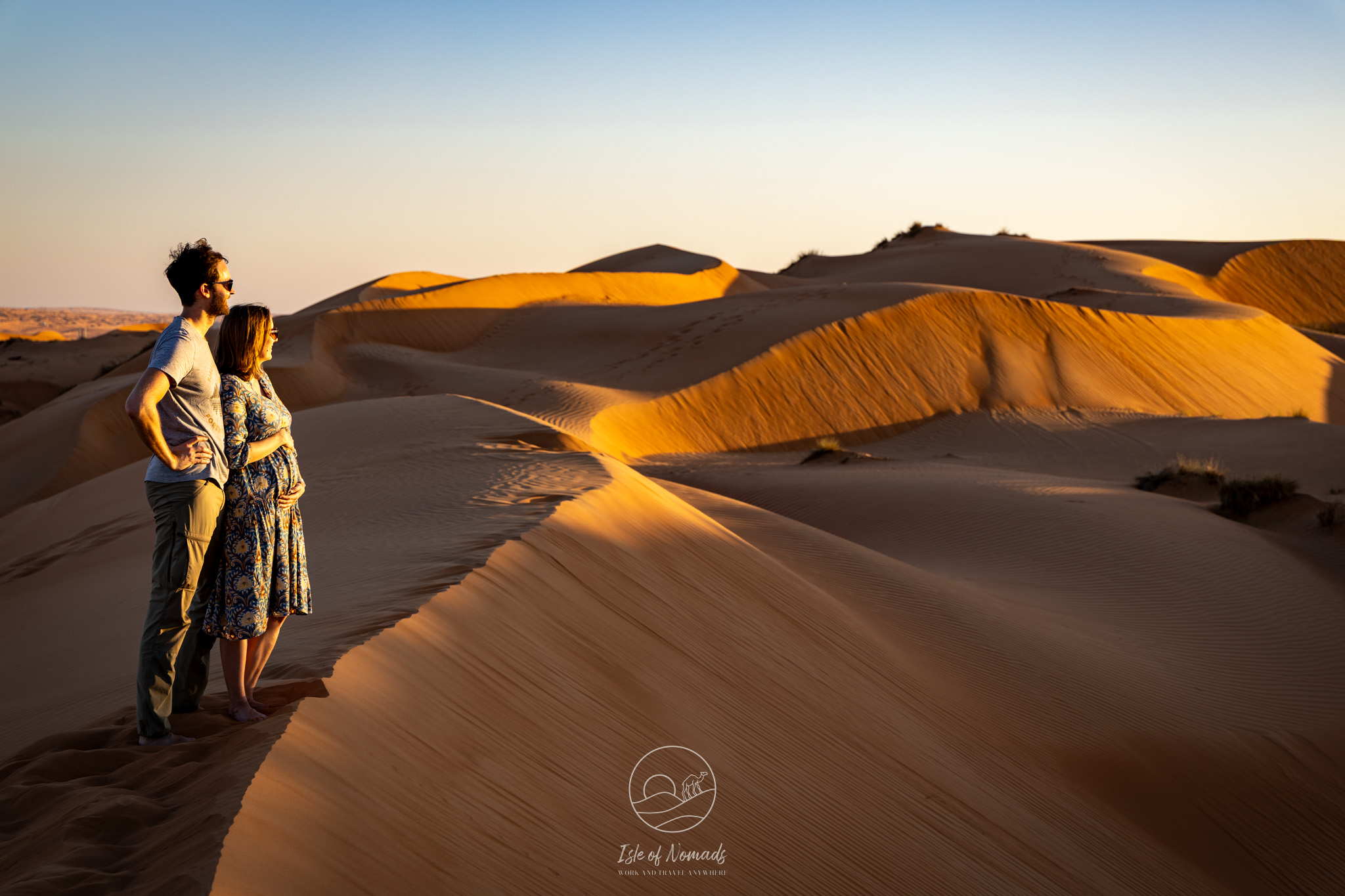
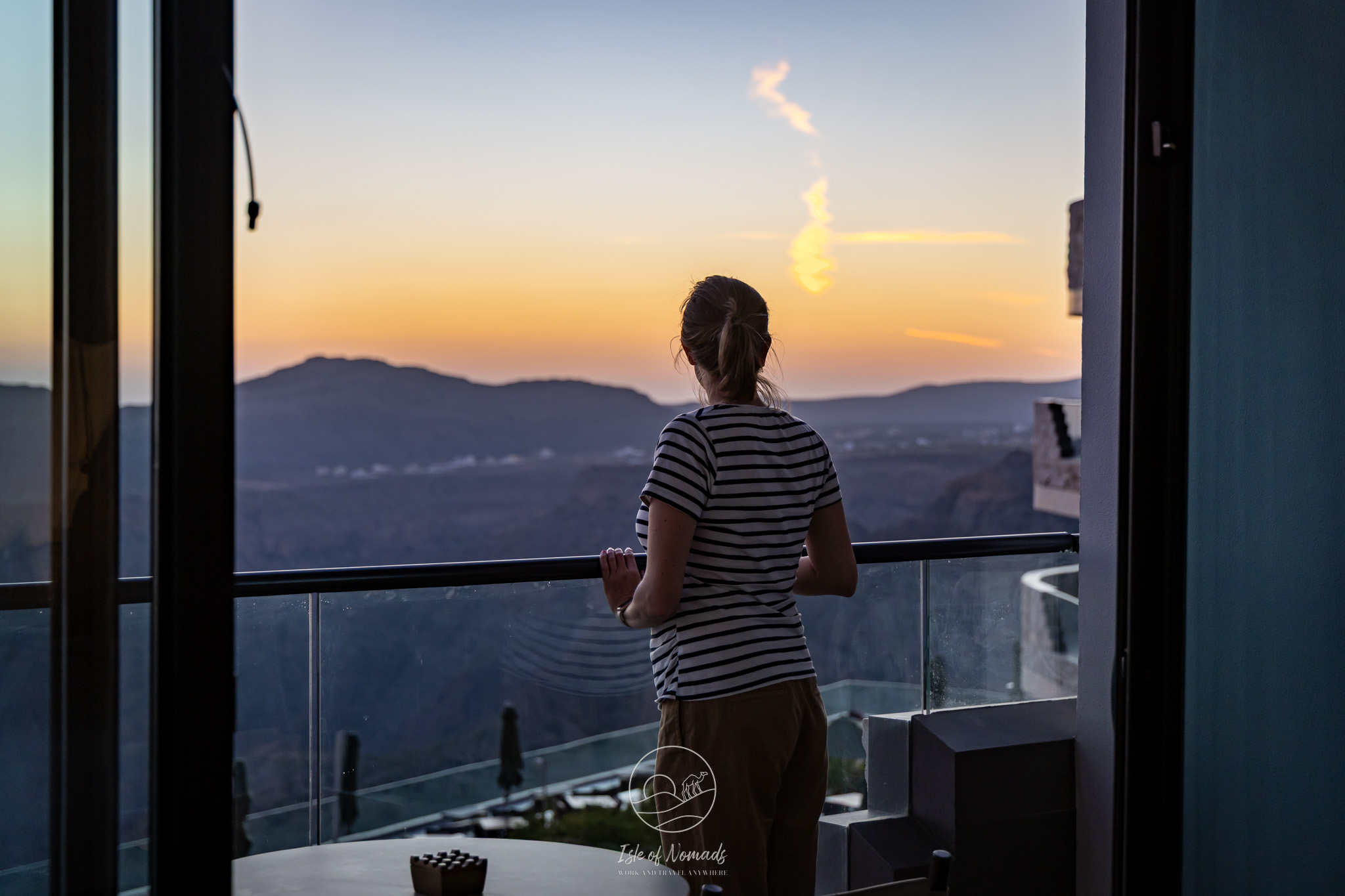
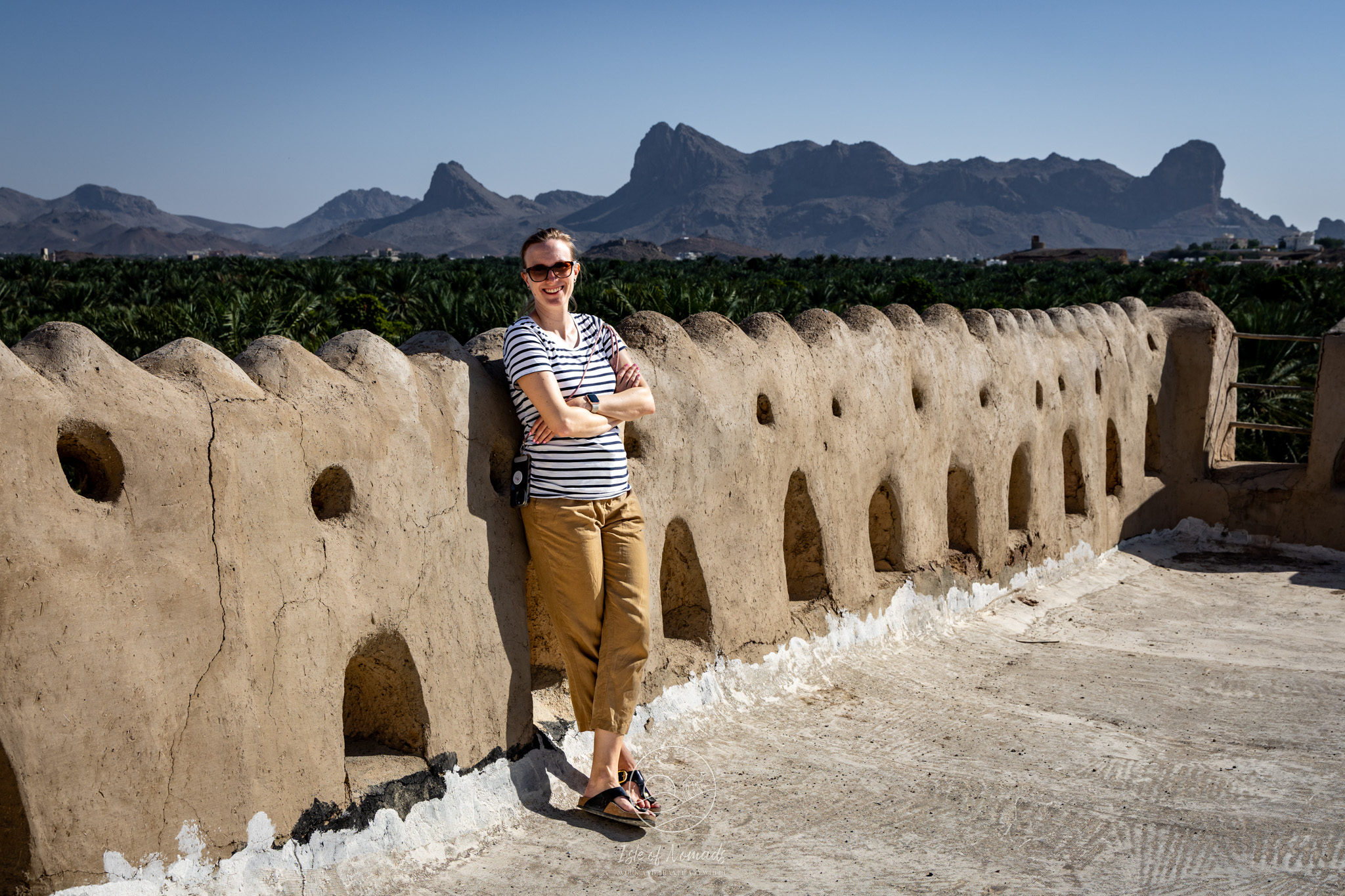
When Cordt and I started researching babymoon destinations, the same handful of places kept coming up: Bali, Mauritius, the Maldives. All beautiful, but I wanted somewhere that offered more than just lying on a beach. Somewhere stunning, comfortable, easy to travel, and genuinely a bit different. I’d already had Oman on my radar for years, and it turned out to be one of the best travel decisions we’ve ever made. At 21 weeks pregnant, I hiked along canyon rims, swam through a wadi, slept under the stars in the desert, and never once felt unsafe or overstretched.
Every place in Oman we’d send you to.
Everything that made the cut from our 3 weeks on the road, pinned and ready to navigate in your Google Maps.
- 36Hotels
- 41Restaurants
- 30Sights
- 25Hidden gems
✓ Used by 155+ travellers
Why Oman is a perfect babymoon destination
Most babymoon listicles push you towards beach resorts. And sure, lying on a beach for a week sounds lovely on paper. But after about three days I personally start climbing the walls. What we wanted was a real trip, with real scenery and a real sense of place. But at the same time, it should hold up for a more relaxed pace than we usually travel. Oman delivered exactly that, and here’s why I think it’s genuinely one of the most underrated babymoon destinations in the world:
- Almost no compromise on what you can do. Outside of a few obvious things (dune bashing, camel rides, very strenuous hikes), every major sight in Oman is doable while pregnant. We did everything we wanted to do. This was the biggest surprise for me.
- Incredible safety record. Oman is one of the safest countries on the planet. Violent crime is essentially non-existent, drivers are courteous, and people will go out of their way to help you. As a pregnant traveler, that peace of mind is priceless.
- Excellent food hygiene. Restaurants (especially in hotels and proper sit-down places in Muscat) maintain very high standards. I had no stomach issues at all, and I'm someone who tends to be cautious about food while pregnant.
- High-quality private hospitals in Muscat. If the worst were to happen, you'd be in good hands. More on this below.
- Excellent infrastructure. Smooth roads, short driving distances, English everywhere, easy parking. Pregnancy can make travel logistics feel harder than they are. Oman makes them easier than usual.
- Mild weather in winter. If you go between November and March, the temperatures are perfect for being outside, and the heat (which can be miserable when pregnant) is manageable.
- No major vaccinations or anti-malarials required. Unlike many "adventure" destinations, you can travel here without any complicated pregnancy-vaccine conversations with your doctor.
- Babymoon-friendly luxury hotels. Oman does luxury exceptionally well, and several of the standout hotels are happy to go above and beyond when you mention a babymoon. More on this below.
Babymoon practicalities for Oman
I collected a few specifics worth knowing before you book.
When to go (trimester matters)
- First trimester (weeks 1-13): Doable, but you'll likely be more tired and possibly nauseous. The long drives and early mornings can feel heavier than they would in the second trimester. Also, miscarriage risk is statistically highest in this window, which can make some people feel more anxious about being far from their home doctor. If you go, expect to scale back the itinerary.
- Second trimester (weeks 14-27): The sweet spot. Energy is back, the bump isn't yet uncomfortable, you can walk and hike and swim, and most airlines have no restrictions. This is when I went, and I'd recommend it 100%.
- Third trimester (weeks 28+): Trickier. Most airlines restrict flying after week 36 (week 32 for twins) and some require a fit-to-fly letter from week 28. The heat will hit you harder, you'll be more uncomfortable on long drives, and you'll want to be closer to your hospital of choice. If you go, I'd recommend doing a shortened, very gentle itinerary (1 week, north only) and avoiding strenuous activities.
When to go (season matters)
For pregnancy specifically, the window is even narrower than for general travel:
- November to March: Ideal. Mild, dry, comfortable. This is when we went.
- April and October: Manageable but getting warm. Daytime temperatures climb into the mid-30s.
- May to September: Avoid. Temperatures regularly exceed 40°C, which is genuinely dangerous in pregnancy. The exception is Salalah during the khareef monsoon (June-September), which is much cooler but also wet and humid, with slippery surfaces (not ideal either).
Budget realistically
Babymoons tend to skew towards comfort. We deliberately stayed at nicer hotels because the whole point of a babymoon is to be pampered, and Oman has some genuinely exceptional ones. Expect to spend somewhere in the range of 150-400 EUR per day per couple depending on your hotel choices, with the higher end reflecting the standout luxury properties. You can absolutely do it more affordably (see our full road trip article for budget alternatives, but a babymoon is the one trip where I’d say it’s worth splurging.
Flying to Oman while pregnant
The flight was the part I was most anxious about beforehand, and it turned out to be completely fine. A few specifics:
Airline policies
Most major airlines (Emirates, Qatar Airways, Etihad, Oman Air) allow uncomplicated single pregnancies to fly without restrictions up to week 28, then require a fit-to-fly letter from your doctor between weeks 28 and 36, and don't allow flying after week 36 (week 32 for twins). Policies vary slightly, so check with your airline before booking.
Our experience
We flew from Barcelona to Muscat via Dubai (around 5 hours plus 1.5 hours after a layover). On the way out at 21 weeks, the airline didn’t ask anything at all. On the way back, I was visibly showing in tighter-fitting clothes and they asked me which week I was at check-in, but were satisfied with my verbal answer (I'd been to my doctor the week before flying just to make sure everything was OK, but didn't have a written letter).
Tips that made the flight easier
- Pay for the emergency exit row or an upgrade if you can. The extra legroom makes a real difference, especially on the longer leg.
- Wear compression socks. Pregnancy increases blood clot risk, and long-haul flights compound that. Compression socks are an easy precaution.
- Hydrate aggressively. Cabin air is dry and dehydration in pregnancy is no joke.
- Get up and walk around every hour or so. Even just standing and stretching in the aisle helps.
- Bring snacks. Pregnancy hunger is real and airline meals don't always cooperate with your timing.
- See your doctor before you fly, even if it's not formally required. The peace of mind is worth the appointment fee.
Healthcare and emergencies
Healthcare in Oman is genuinely excellent, especially in Muscat. The private hospitals are modern, well-staffed, English-speaking, and used to treating international patients. This was a big factor in why I felt comfortable traveling here pregnant.
Hospitals to know about
Before our trip, I researched and picked out an emergency hospital so that if anything went wrong, I wouldn't be googling in a panic. I’d recommend doing the same. Here’s a starting point:
- Muscat Private Hospital (Google Maps)) is widely regarded as one of the best private hospitals in Oman, with a strong reputation for maternity and emergency care.
- Burjeel Hospital Muscat (Google Maps)) is part of a well-known Gulf hospital network with good standards.
- Royal Hospital of Oman (Google Maps)) is the main public referral hospital and is well-regarded for serious cases (you'd typically only end up here if a private hospital refers you).
- Nizwa Hospital (Google Maps)) is the main hospital in the Nizwa region. For non-emergencies, you’re probably better off driving back to Muscat (around 1.5h) for private care.
- Sultan Qaboos Hospital Salalah (Google Maps)) is the main hospital in the Dhofar region if you're going as far south as Salalah.
Travel insurance is non-negotiable
Private healthcare in Oman is excellent but expensive, and you don't want to be stressing about bills mid-emergency. Make sure your travel insurance:
- Covers pregnancy explicitly (many standard policies have exclusions or limits)
- Covers your gestational age (some policies stop covering pregnancy-related issues after a certain week)
- Includes medical evacuation in case you need to be flown home
Activity-by-activity pregnancy guide
Here’s the honest rundown of every major activity in our itinerary and how it played out at 21 weeks pregnant. My overall philosophy: don't overthink it, go with your gut on what feels safe in the moment, be prepared to take it slow, and skip what doesn't feel right for your specific situation. Every body and every pregnancy is different.
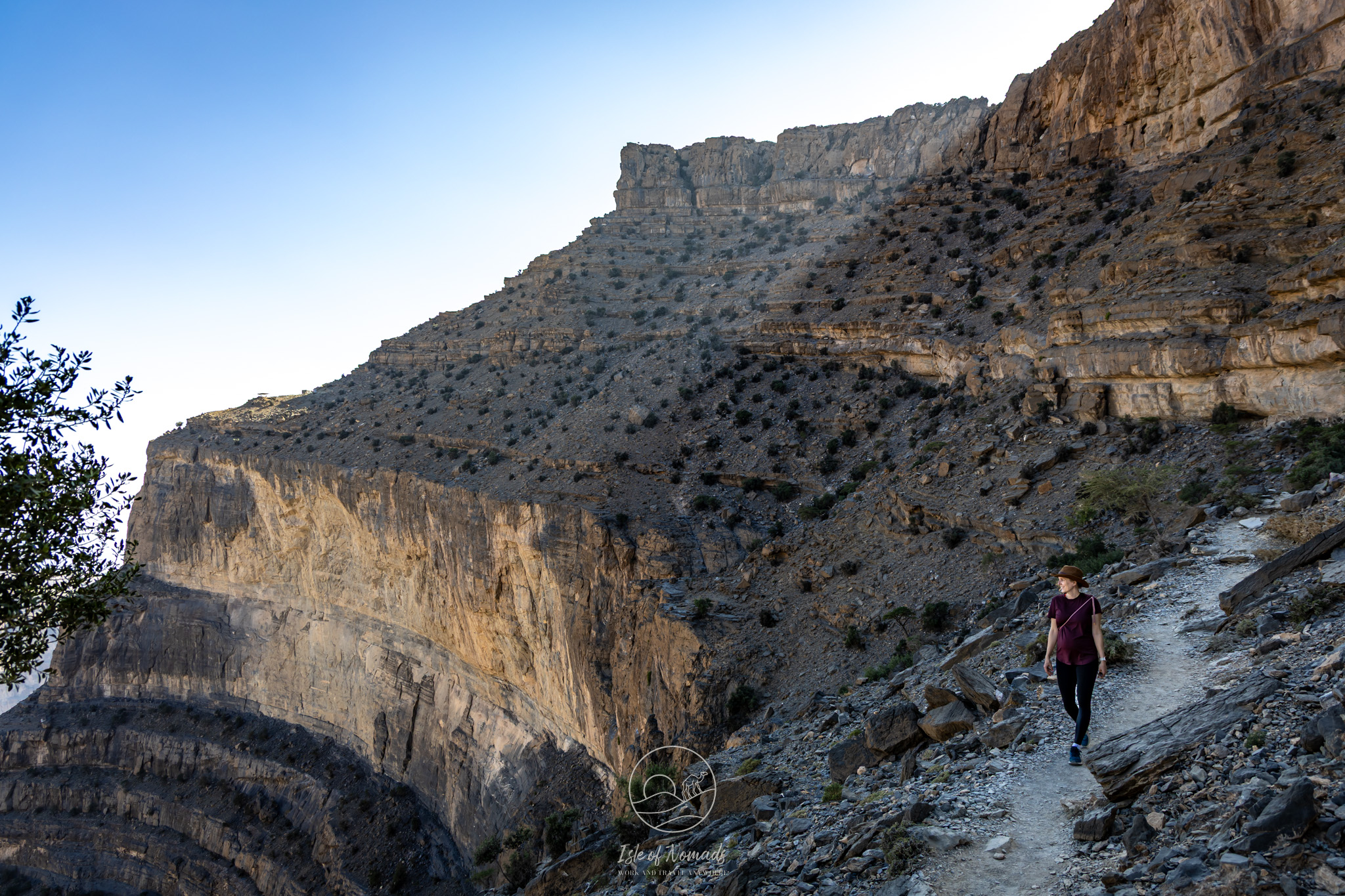
Balcony Walk at Jabal Shams (hike): Did it. The trail is mostly flat and follows the canyon rim. We didn't finish the full thing, but not because of me. Cordt has a fear of heights and the path got narrower than he was comfortable with. Pregnancy-wise, the hike itself is very manageable as long as you go slowly and bring plenty of water. There are no scrambles or technical sections in the parts we did. Verdict: yes, with a slow pace.
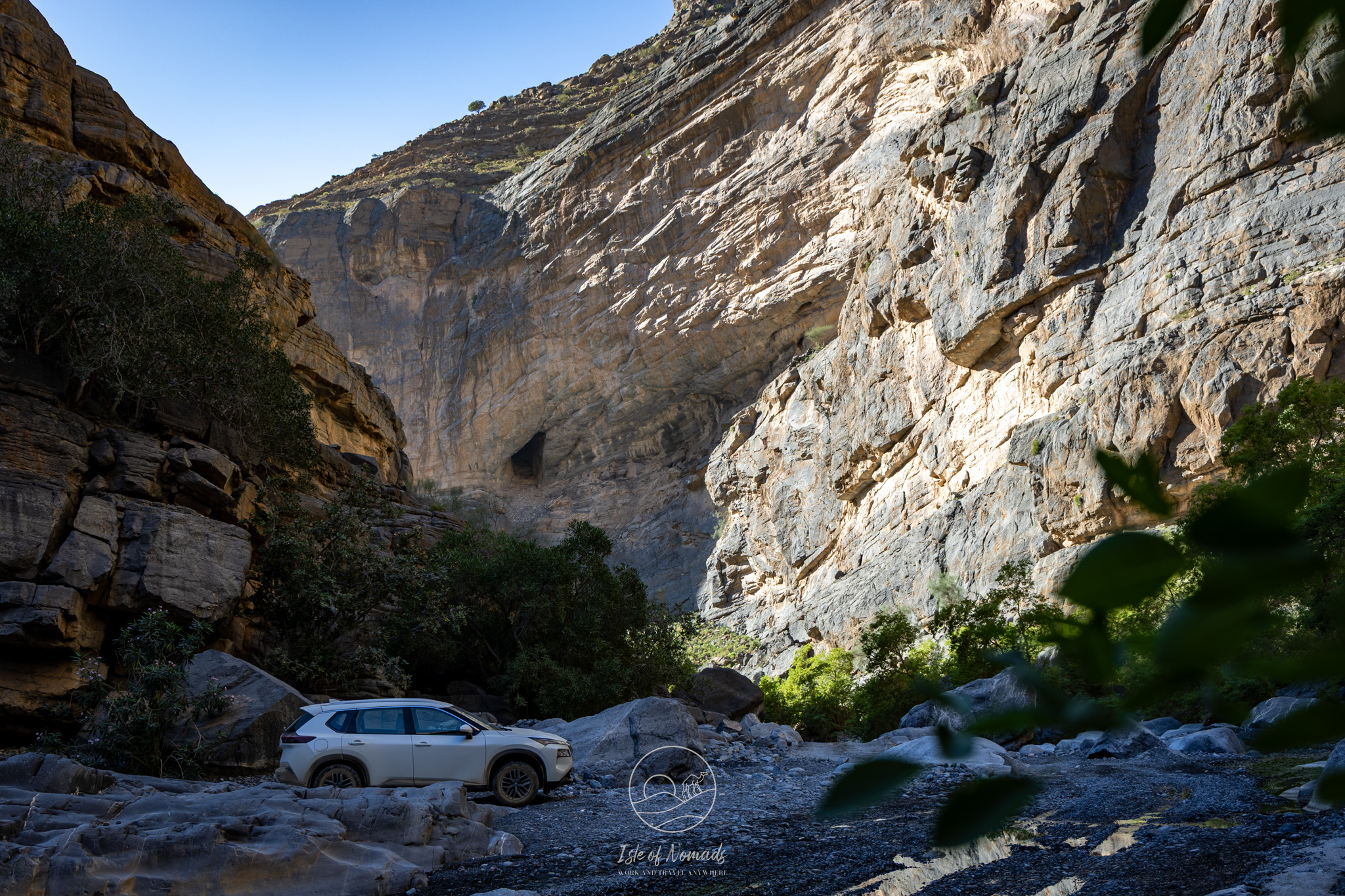
Driving into Wadi Ghul (4x4 canyon drive): Did it. The road is bumpy but you’re in the car and going slowly. Verdict: yes, no issue.
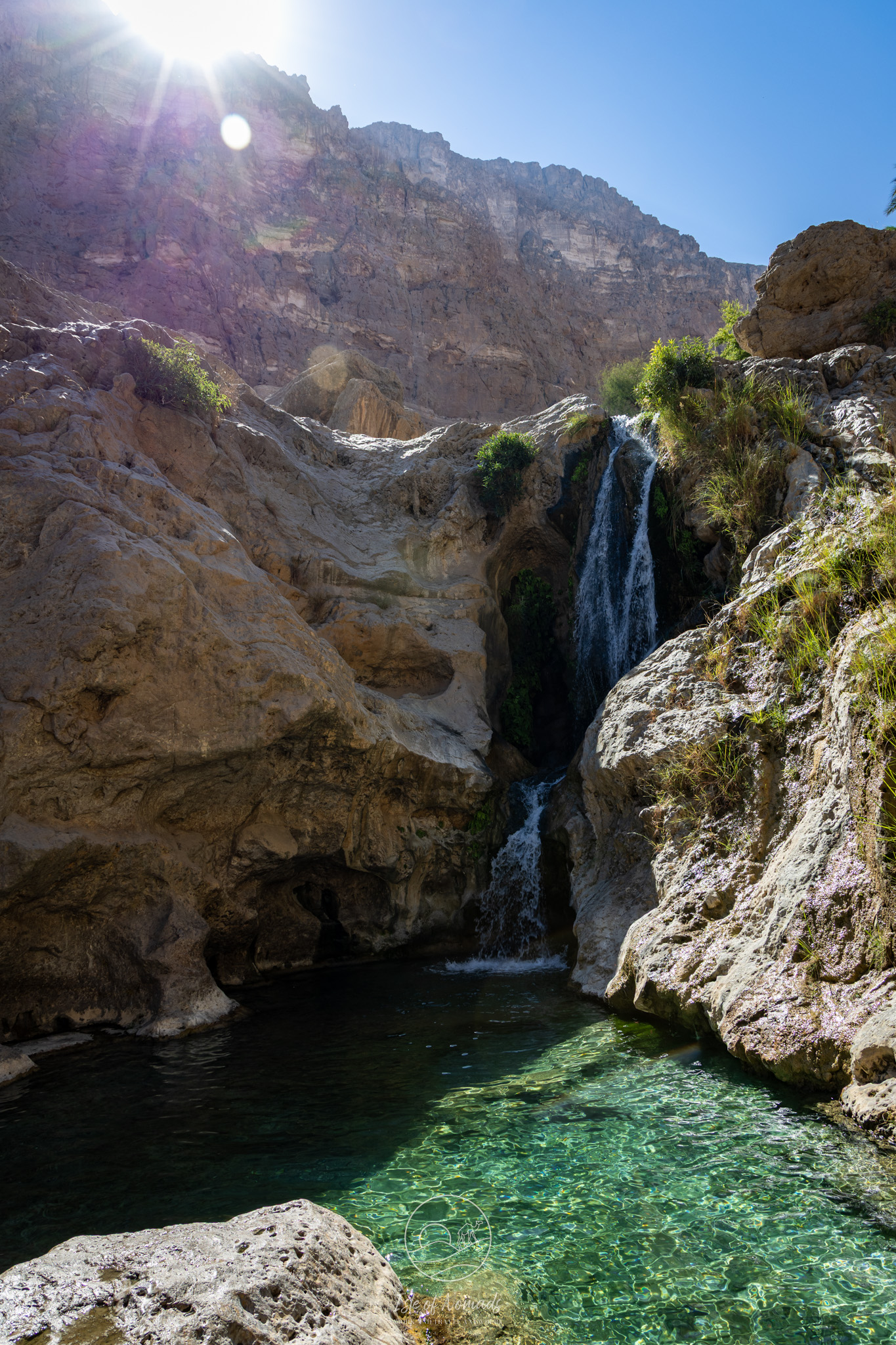
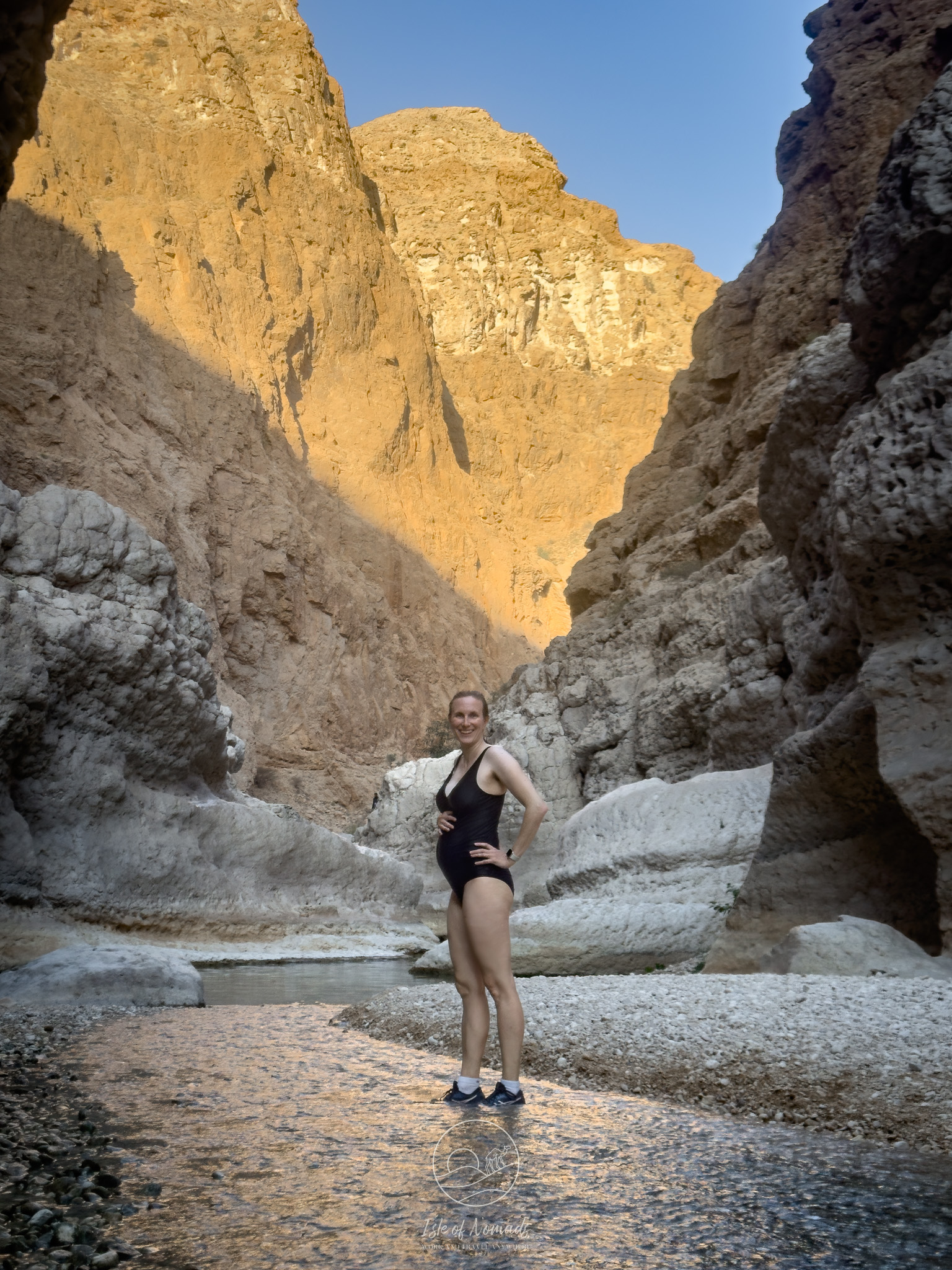
Wadi Shab (swim + hike through canyon): Did it, partially. You take a short boat ride, then hike along the canyon, then wade and swim through a series of pools to reach the cave at the end. I turned around before the cave because the final climb-up section looked slippery and I didn't want to risk a fall. The earlier sections were beautiful and totally manageable. Verdict: yes, but listen to your gut about how far you push.
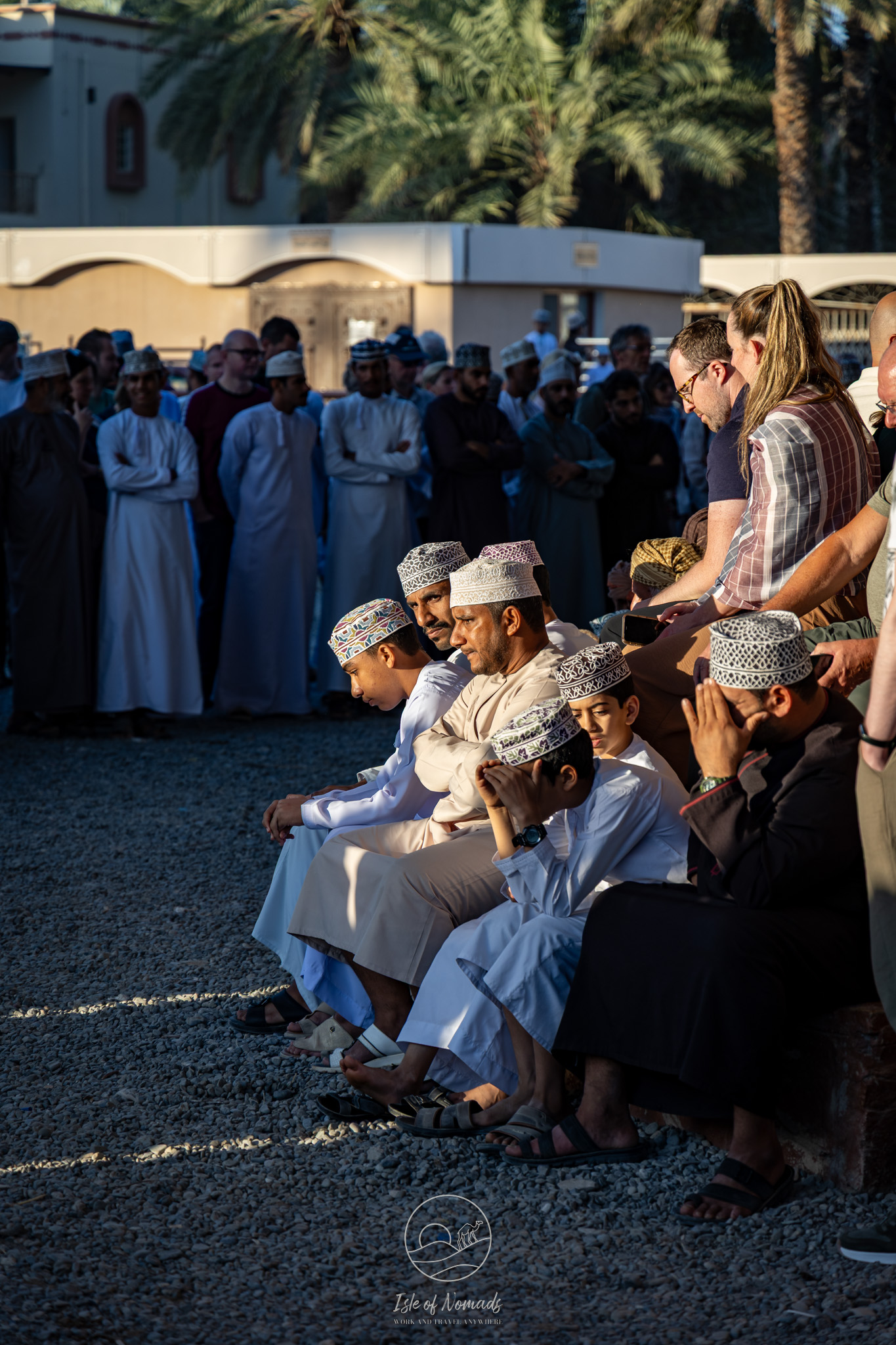
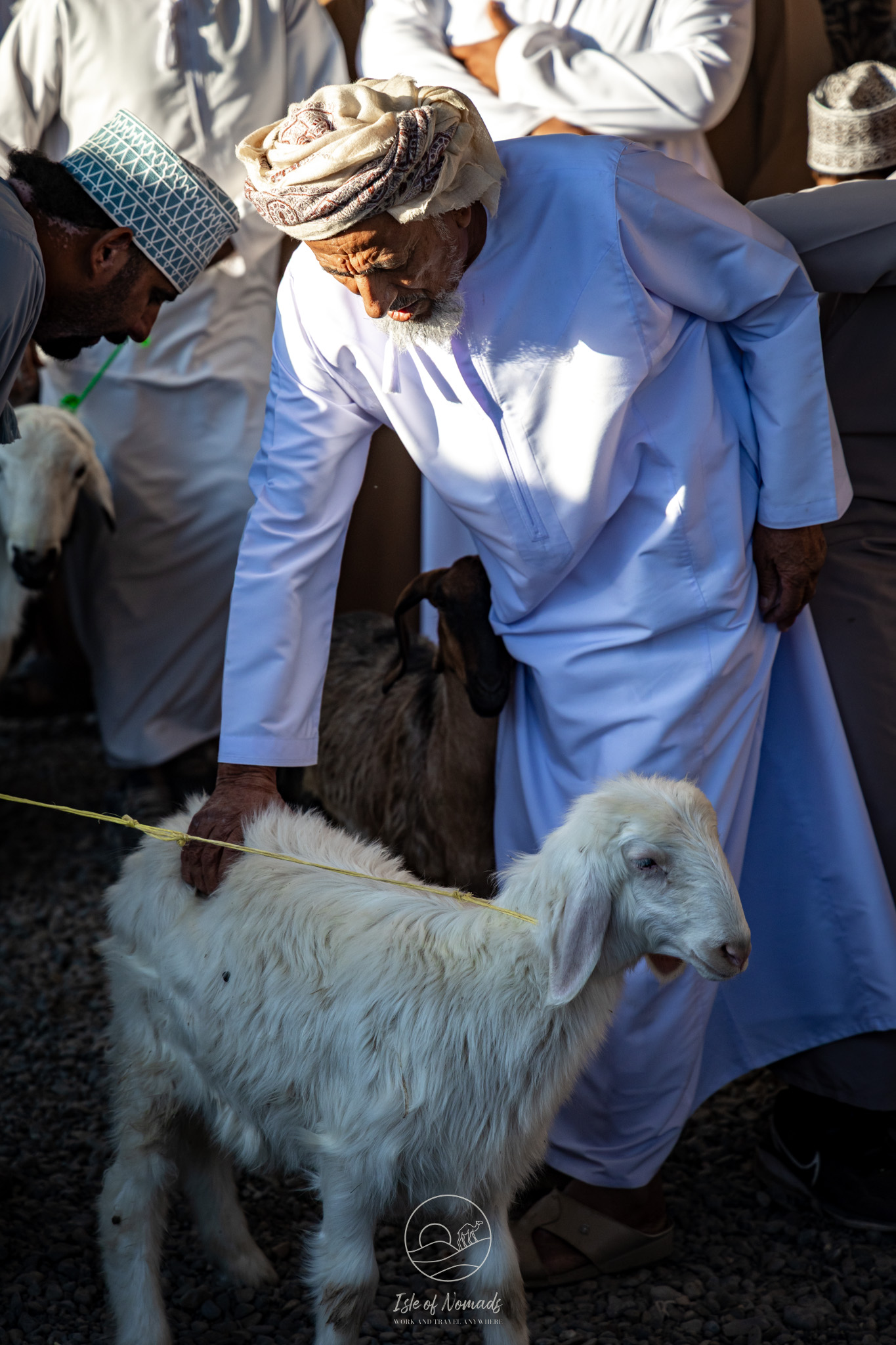
Nizwa goat market (early morning): Did it. Lots of standing and walking on uneven ground, plus an early start. Wear comfortable shoes and pace yourself. Verdict: yes, just don't stand for hours straight.
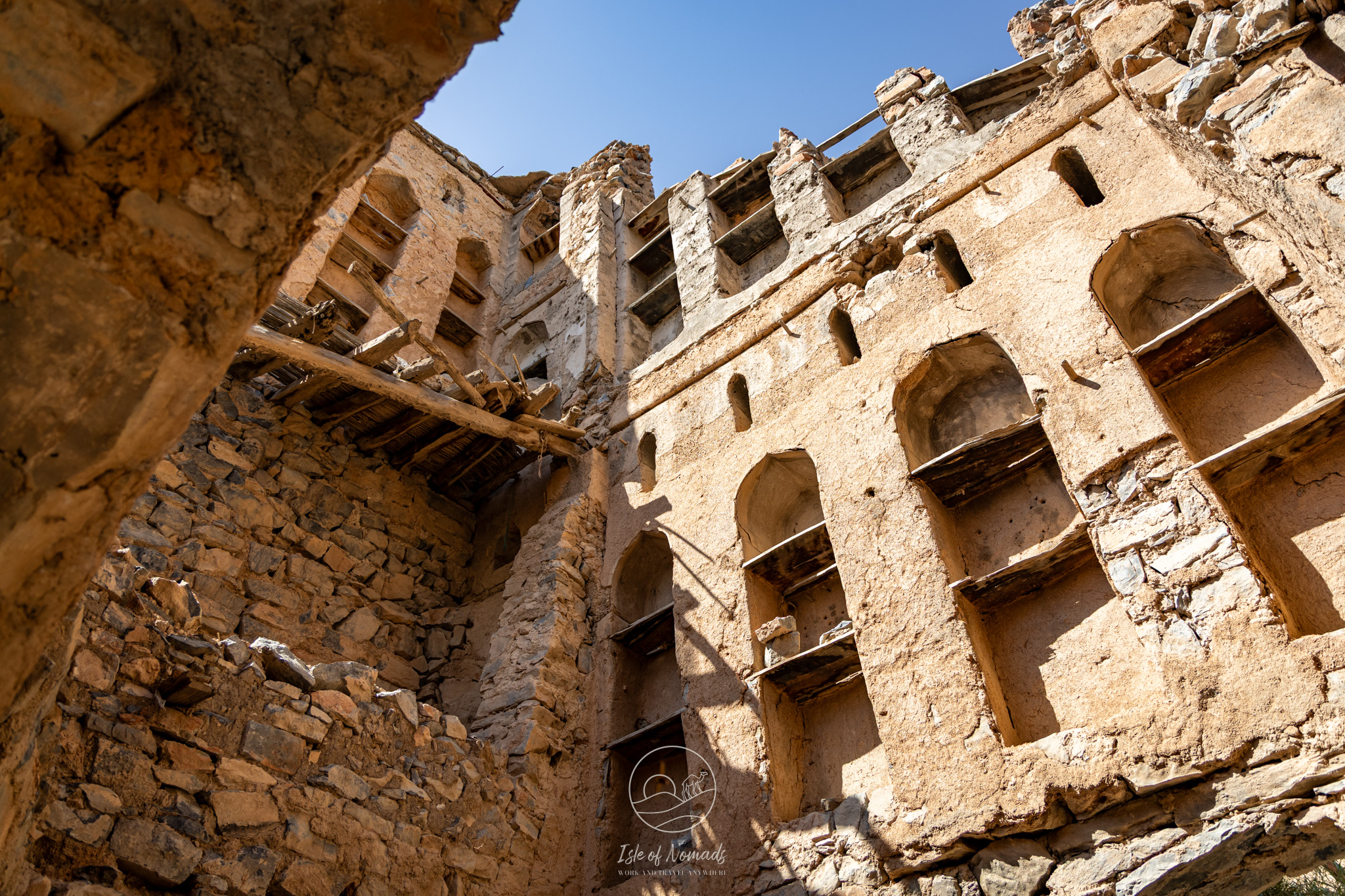
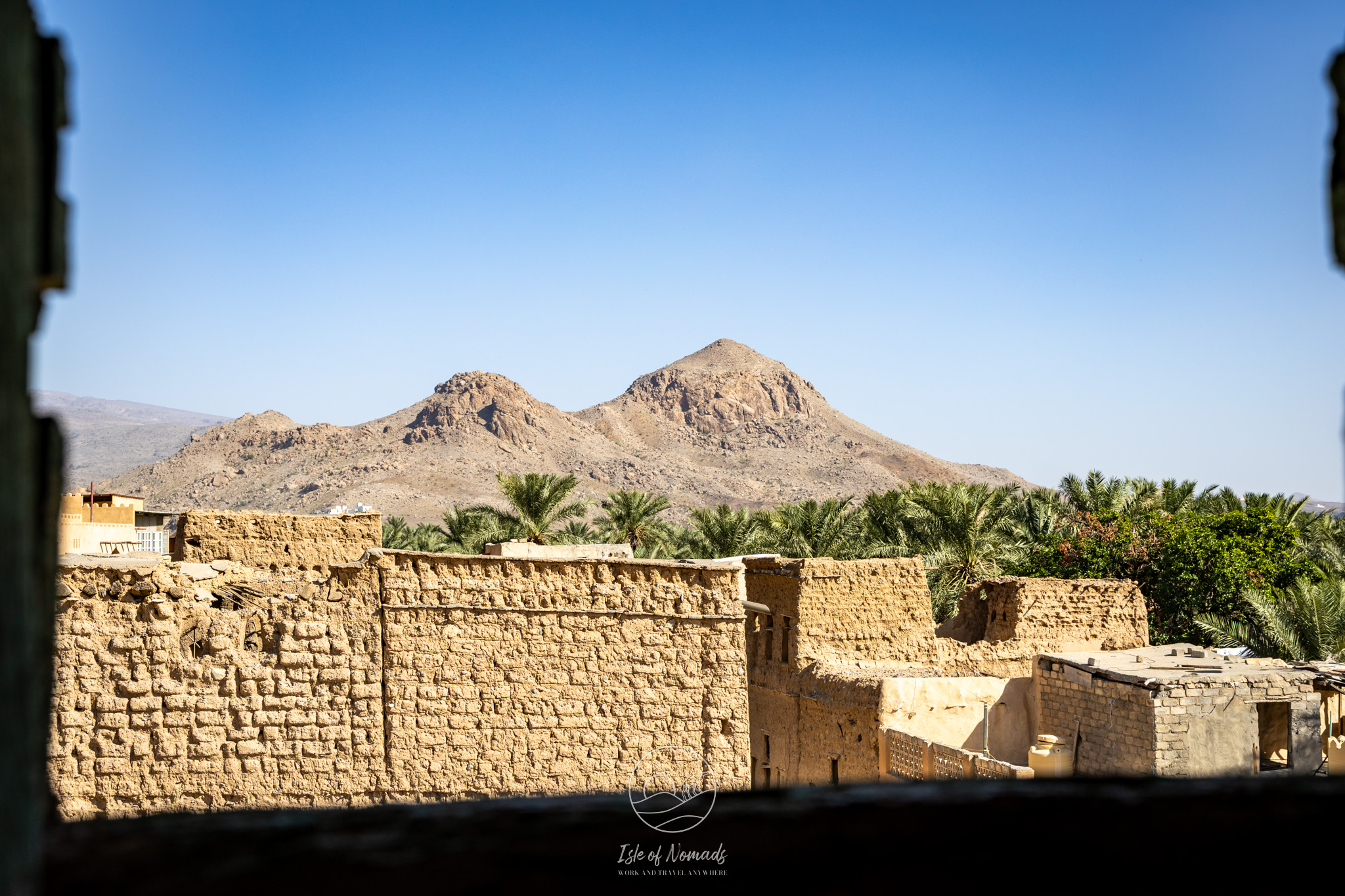
Nizwa, Bahla and Jabreen forts: Did it. Lots of stairs in some of the forts, but you can pick and choose. Verdict: yes, take breaks.
Bait Al Safah living museum: Did it. Easy walk, sit-down demonstrations, food tastings. Verdict: yes, absolutely.
Misfat Al Abriyeen village: Did it. Cobbled paths, some steps. Verdict: yes, wear good shoes.
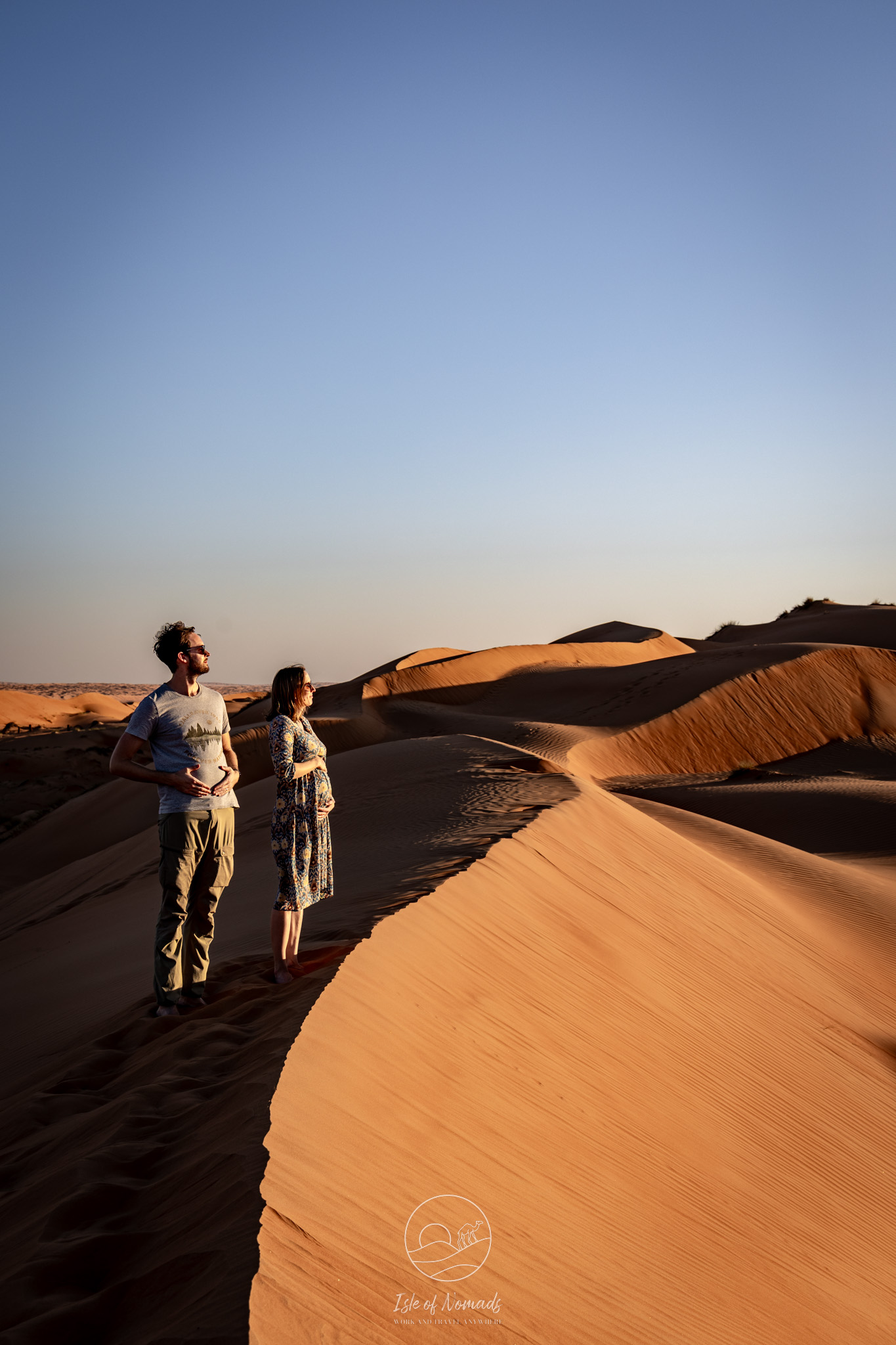
Wahiba Sands (sleeping in the desert): Did it. The camp drives you in over the dunes, and they typically have you in their vehicle for this part anyway. The night itself is very peaceful and great for sleep, although the mattresses in basic camps aren't always the most pregnant-friendly. If you have a bad back, consider a more upscale camp. Verdict: yes, possibly upgrade to a fancier camp.
Dune bashing: Did NOT do. Verdict: no, definitely skip.
Camel riding: Did NOT do. The motion isn't really safe in pregnancy, plus the dismount can be awkward. Verdict: no.
Ad Dimaniyat Islands snorkel trip: Did it, with some hesitation. I was worried about the boat ride being bumpy. I told the tour provider I was pregnant when booking, and they did two things: checked the sea conditions on the morning (no high waves or choppy sea) and let the captain know to drive at a moderate speed. November has notoriously calm seas in this part of Oman, so the timing helped. Other times of year can be choppier. Verdict: yes if conditions are right, ask the operator to check.
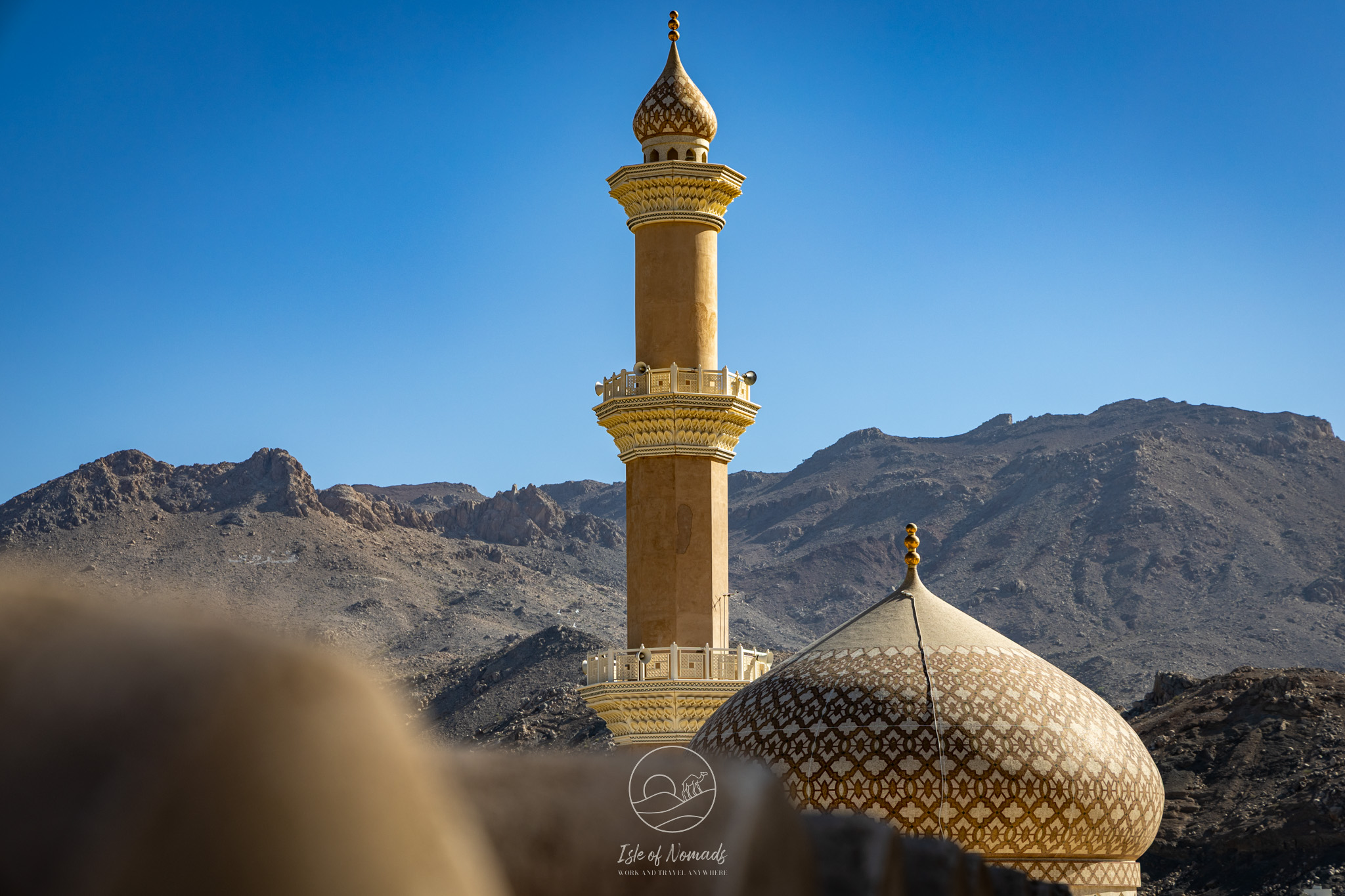
Sultan Qaboos Grand Mosque: Did it (briefly). Lots of walking and you need to dress fully covered, which is hot. Go early. Verdict: yes, but go in cooler hours.
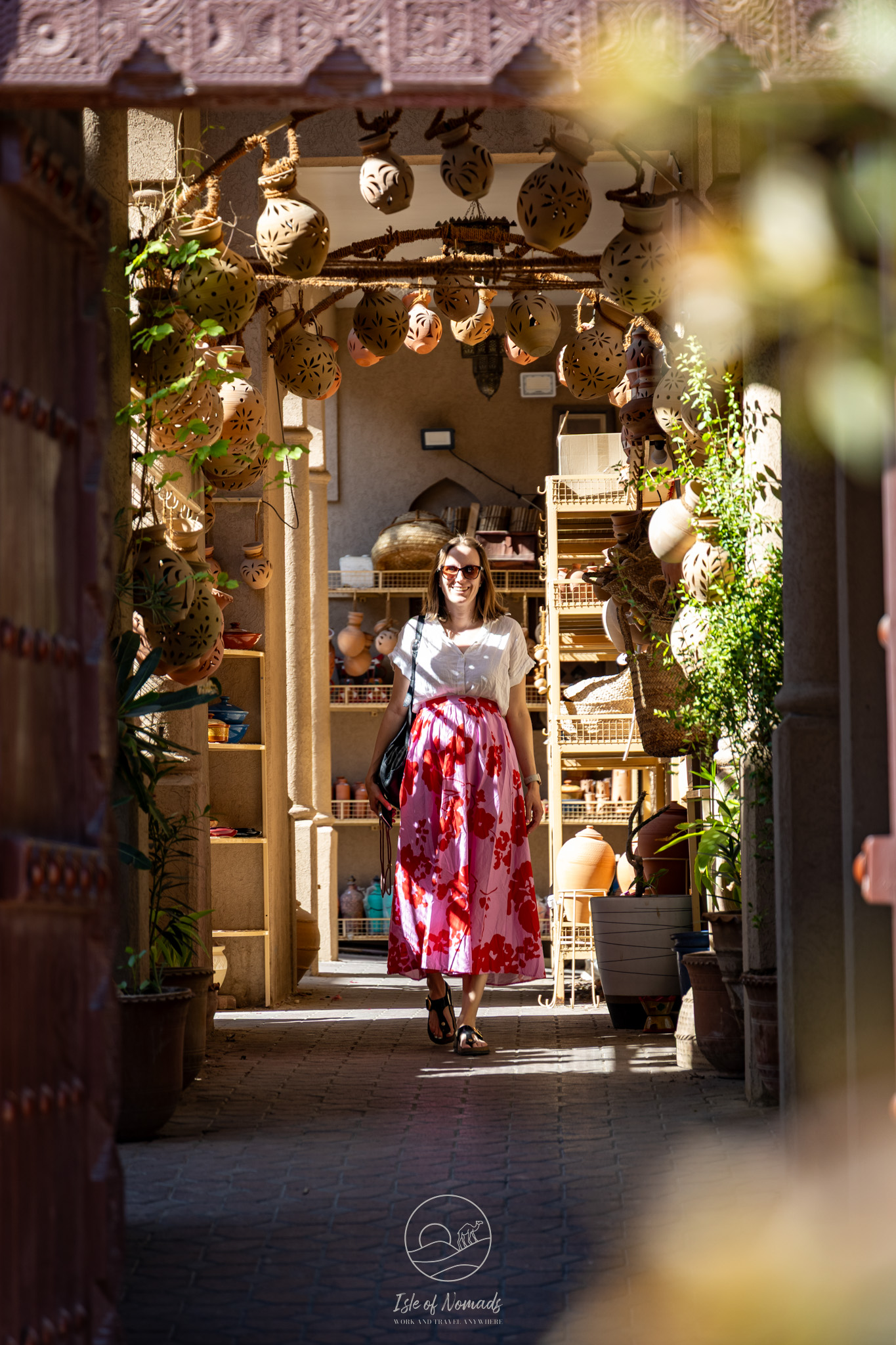
Mutrah Souq: Did it. Easy walking, lots to look at, sit-down cafes nearby. Verdict: yes.
Where to stay: babymoon-friendly hotels
If you’re going to splash out on one part of the trip, make it the hotels. Oman has some genuinely exceptional luxury and mid-range options, and several of them go above and beyond for babymoons if you mention it ahead of time.
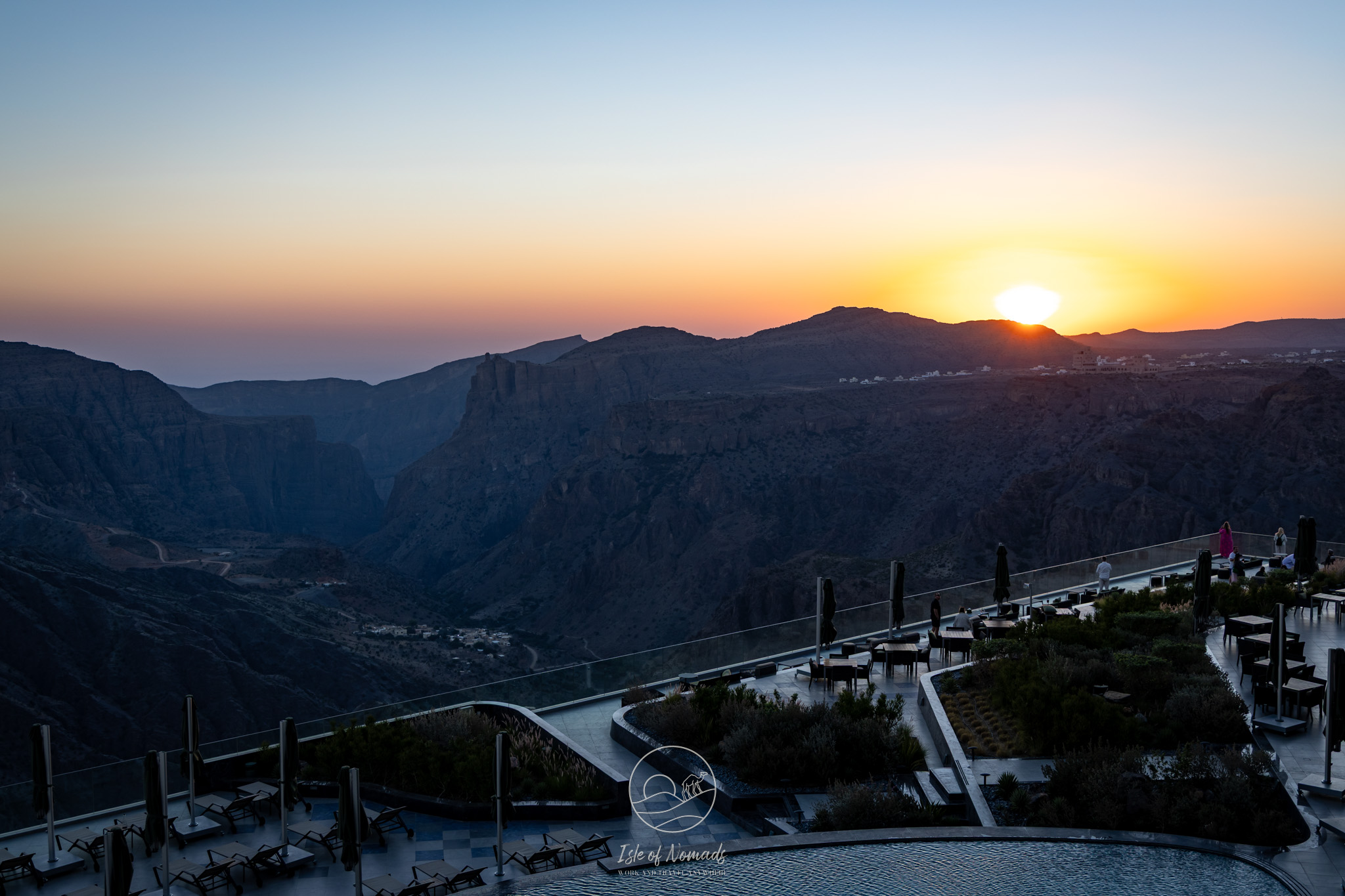
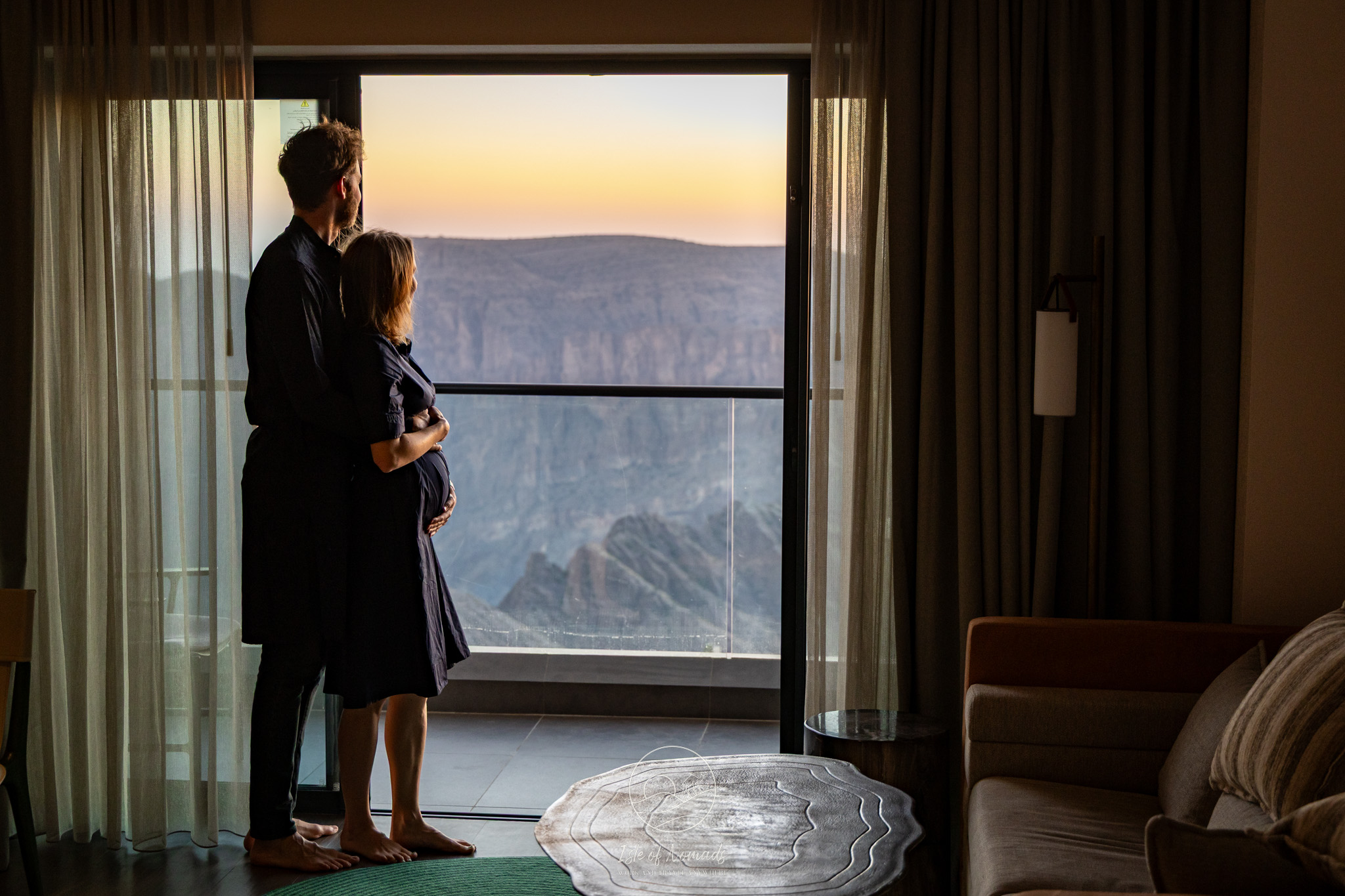
The standout was Hotel Indigo Jabal Akhdar Resort & Spa (and no, I do not get paid for gushing about them XD). I mentioned the babymoon in the comments when booking and also signed up for their IHG loyalty program, and when we arrived they had upgraded us to a beautiful canyon-view suite, decorated the room with pink and blue balloons, and folded the towels into the most adorable elephants. They also offer pregnancy-safe massages in their spa, which I didn't end up doing but which would have been lovely. The location on the canyon rim is unbelievable. If you only stay at one fancy hotel during your babymoon, make it this one.

For full hotel recommendations across all the regions covered in this itinerary (Muscat, Jabal Shams, Nizwa, Wahiba Sands, Salalah), see our full Oman road trip article or jump to our Complete Travel Guide for the full list.
Babymoon tip: When booking, always mention in the comments that you're traveling for a babymoon. Many hotels (especially the higher-end ones) will do little touches to make the stay feel special. Worst case: nothing happens. Best case: you get a free upgrade and towel elephants.
Every place in Oman we’d send you to.
Everything that made the cut from our 3 weeks on the road, pinned and ready to navigate in your Google Maps.
- 36Hotels
- 41Restaurants
- 30Sights
- 25Hidden gems
✓ Used by 155+ travellers
1 week babymoon itinerary
A week in Oman is enough to get a real feel for the country without overdoing it pregnant. This itinerary focuses on the north and builds in rest days. For full descriptions of each sight, see the 1 week itinerary in our main Oman article.
Day 1: Arrive in Muscat (rest day)
Fly into Muscat International Airport and pick up your rental car. Head straight to your hotel. After a long flight, this is your rest-and-hydrate day. If you have energy in the evening, a short stroll along Mutrah Corniche is gentle and lovely.
Day 2: Drive to Jabal Shams, gentle hike
Supermarket stop in Muscat (water, snacks, comfortable food you trust). Drive 3 hours up to Jabal Shams. After lunch and a rest, start the Balcony Walk at a slow pace. You don't need to finish the full hike to get incredible views, so turn around whenever you feel ready. Spend the night at a guesthouse on the rim (we loved Jebel Shams Sky Homestay).
Day 3: Jabal Shams + drive down
Slow morning enjoying the views. If you have a 4x4, the drive into Wadi Ghul is bumpy but worth it (you’re in the car the whole time). In the afternoon, drive down towards Nizwa, stopping at Misfat Al Abriyeen and Bait Al Safah. Sleep in or around Nizwa.
Day 4: Nizwa region
If today is a Friday, set your alarm for the Nizwa goat market (6am). If not, skip the early morning and visit the three forts (Nizwa, Bahla, Jabreen) at a relaxed pace, with plenty of sit-down breaks. Have a nice dinner and an early night.
Day 5: Rest day OR Jabal Akhdar
Take a true rest day at your hotel pool or spa, or (if you have a 4x4) drive up to Jabal Akhdar for the night. Hotel Indigo is the most beautiful babymoon stay you could ask for, even for just one night. See Day 4 of the 10-day itinerary below for what to do up there.
Day 6: Wadi day + return to Muscat
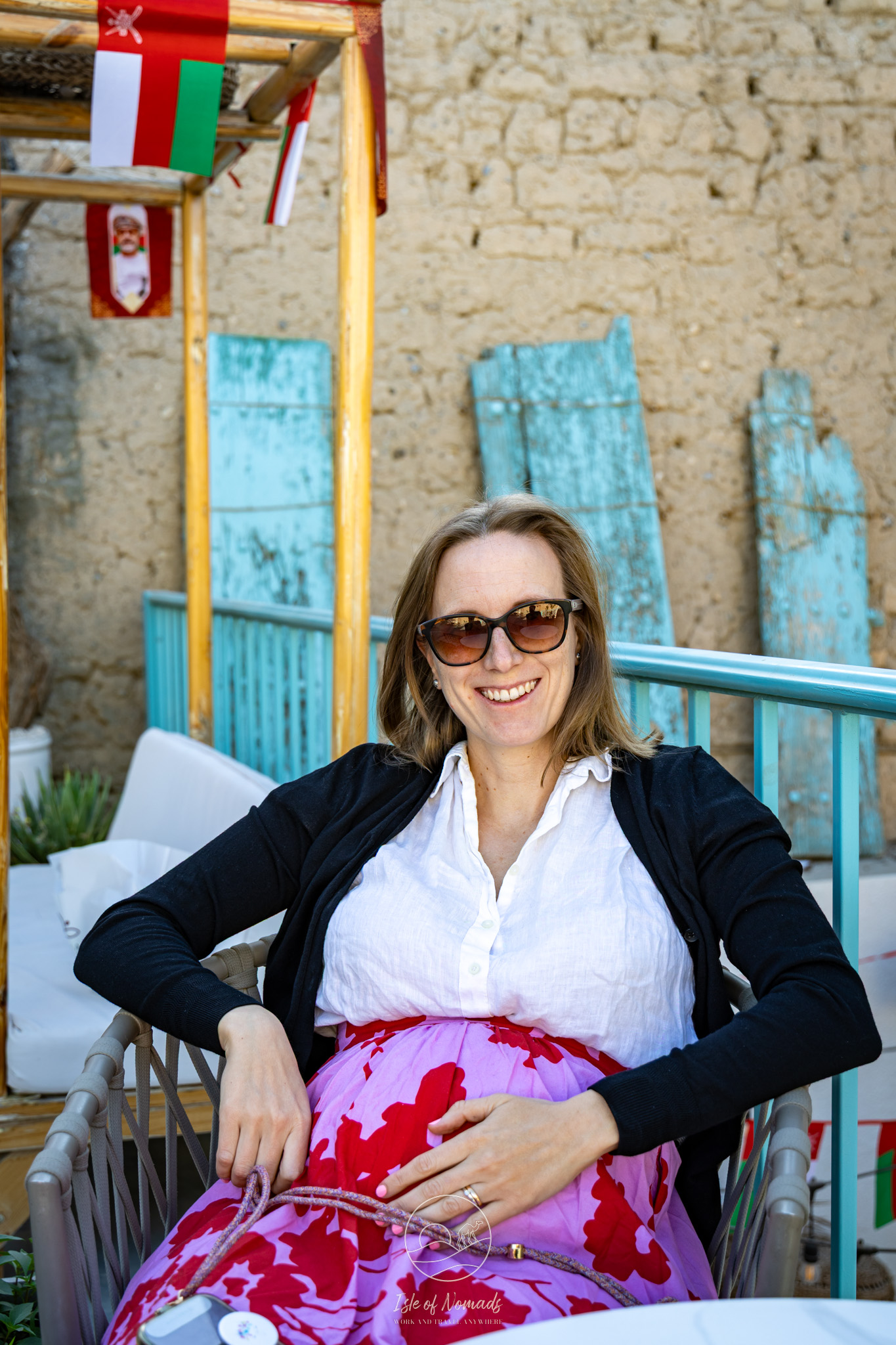
Drive towards the coast and stop at Wadi Shab. You can experience plenty without needing to complete the full canyon swim, but the entry into the canyon (boat ride + first pools) is doable and beautiful. Continue back to Muscat. Stop for a traditional Omani dinner at Almohamady Restaurant if you have the energy.
Day 7: Easy Muscat day + fly out
Visit the Sultan Qaboos Grand Mosque in the morning (cooler, less tiring), then a leisurely stroll through Mutrah Souq in the late afternoon. Head to the airport in the evening.
10 day babymoon itinerary
This is what Cordt and I did, and in my opinion it's the absolute sweet spot for an Oman babymoon. You get all the highlights, real rest days at beautiful hotels, and a much more relaxed pace than the 1-week version. The 10-day version really benefits from a 4x4 to unlock Jabal Akhdar.
Days 1-2: Arrival and Jabal Shams
As in the 1-week itinerary above (arrival rest, drive up to Jabal Shams, gentle Balcony Walk).
Day 3: Around Jabal Shams + drive to Jabal Akhdar
Slow morning, drive into Wadi Ghul if you have a 4x4. In the afternoon, make your way down and across to Jabal Akhdar (requires 4x4 at the security checkpoint). Arrive at your hotel and let yourself be properly pampered. Mention the babymoon when booking for the best chance at a sweet welcome.
Days 4-6: Jabal Akhdar, Nizwa goat market, rest days
These three days are designed to balance one cultural day, one gentle exploration day, and one true rest day. Adjust the order so that the Nizwa day falls on a Friday:
- Nizwa day: Early start for the goat market, then forts. Drive back to Jabal Akhdar in the evening.
- Exploration day: Visit Wadi Bani Habib (short walk, no steep sections) and the historic village of Al-Sugra in Sayq. Both are gentle outings within 30 minutes of your hotel.
- Rest day: Spend the day at your hotel. Infinity pool, pregnancy massage at the spa, slow breakfasts. Don't feel guilty about it. This is your babymoon.
Day 7: Drive to Wahiba Sands
Drive south-east to the desert (about 3.5h). Most camps arrange a pickup at the edge of the sands (typically 3pm) and drive you into camp. We stayed at Rashid Private Camp which was simple, peaceful, and beautiful. If you want something more luxurious (and more pregnancy-friendly in terms of mattresses and amenities), consider Remal Resort Bidiyah or a similar upscale option. Skip dune bashing and camel rides; instead enjoy the silence, the sunset over the dunes, and one of the most insane night skies you'll ever see.
Day 8: Desert to Muscat via Wadi Shab
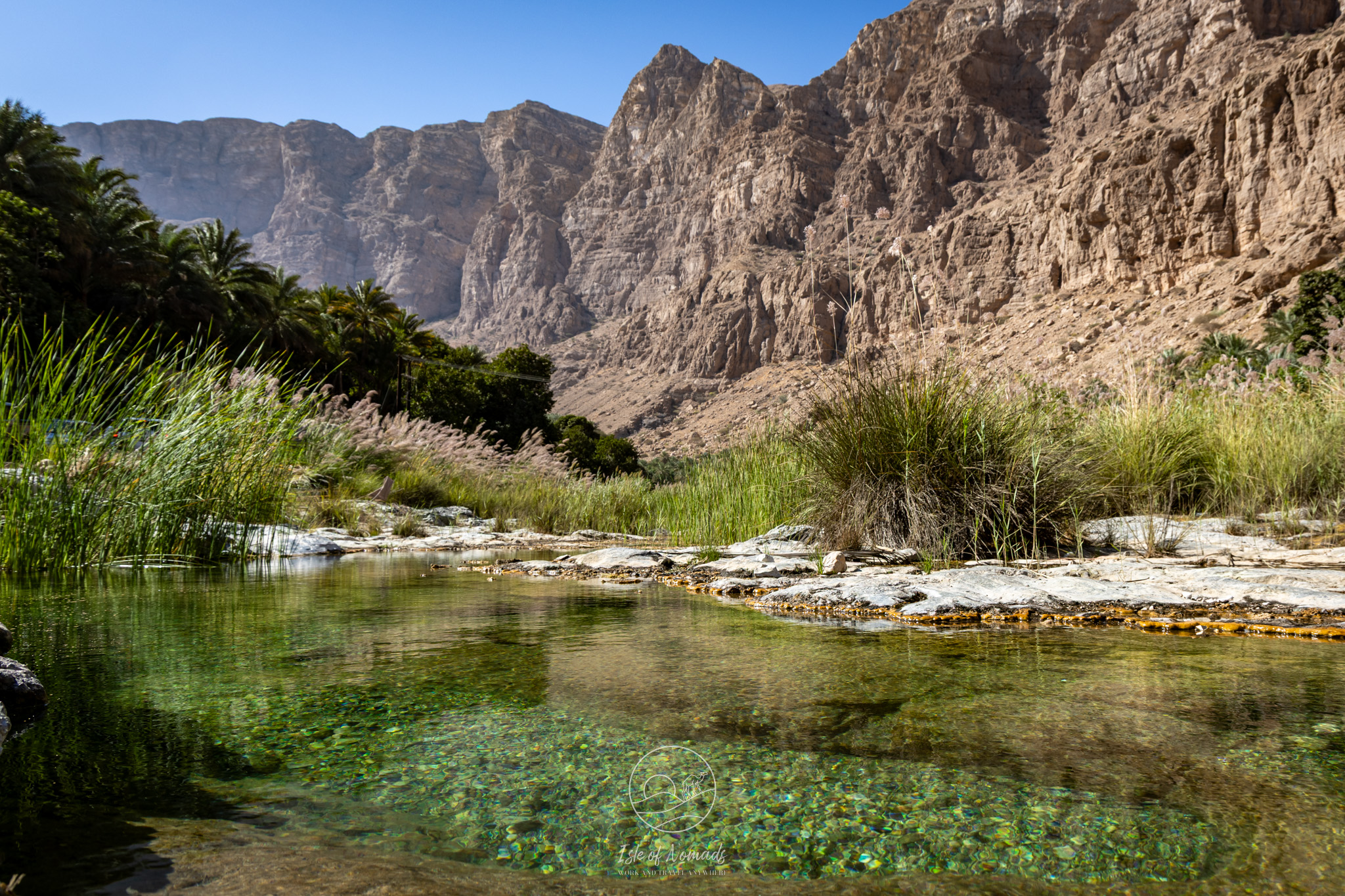
Drive back out of the desert and continue north to Muscat, stopping at Wadi Shab on the way. Listen to your body about how far into the canyon you go. The first sections (boat ride and first pools) are doable and gorgeous; the deeper sections with climbing aren't worth the risk. Drive on to Muscat and check into your hotel for the next 3 nights.
Day 9: Muscat city day (gentle version)
Don't try to do everything. Pick two or three things and pace yourself:
- Sultan Qaboos Grand Mosque in the morning (cooler, also the only time non-Muslim visitors can go).
- Royal Opera House Muscat for a tour or a performance.
- Mutrah Souq and Corniche in the late afternoon when temperatures drop.
In between, take breaks at cafes. Dinner at Almohamady Restaurant for a traditional Omani experience.
Day 10: Optional Dimaniyat Islands + fly out
If you have a late evening flight and the sea is calm, you can do the Ad Dimaniyat Islands tour. Tell the operator you’re pregnant; ours checked sea conditions and asked the captain to drive at a moderate speed. It's not the highlight of Oman, but it's a nice last day if the conditions are right. Otherwise, spend the day at your hotel pool and head to the airport in the evening.
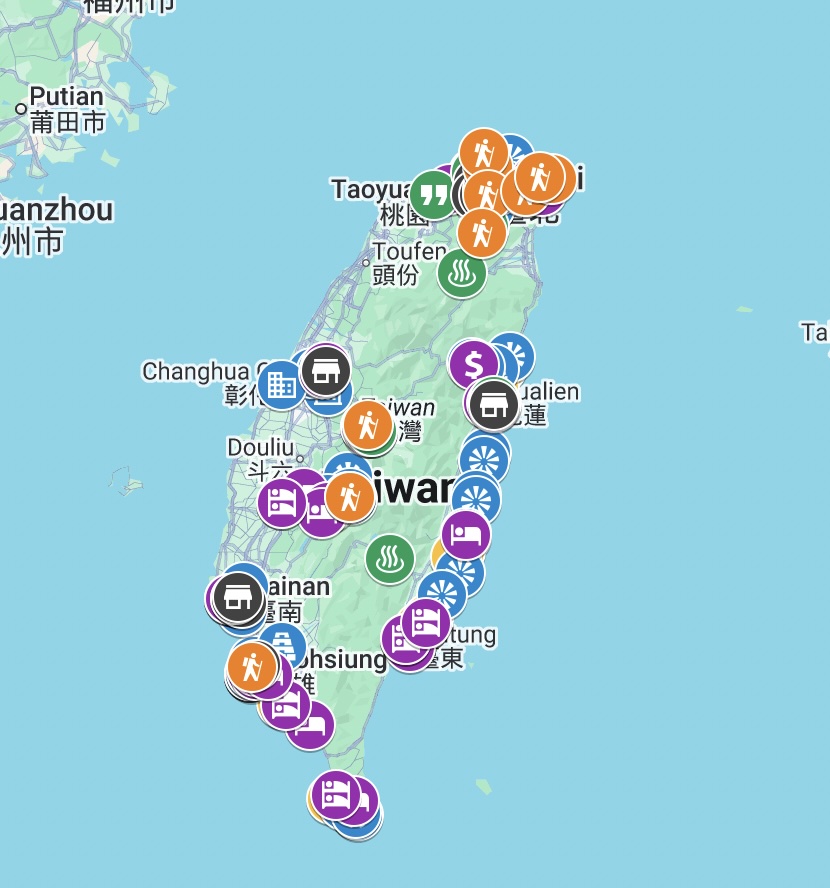
The complete Oman travel map.
Every hotel, restaurant, sight and hidden gem from 3 weeks across Oman. Straight into your Google Maps.
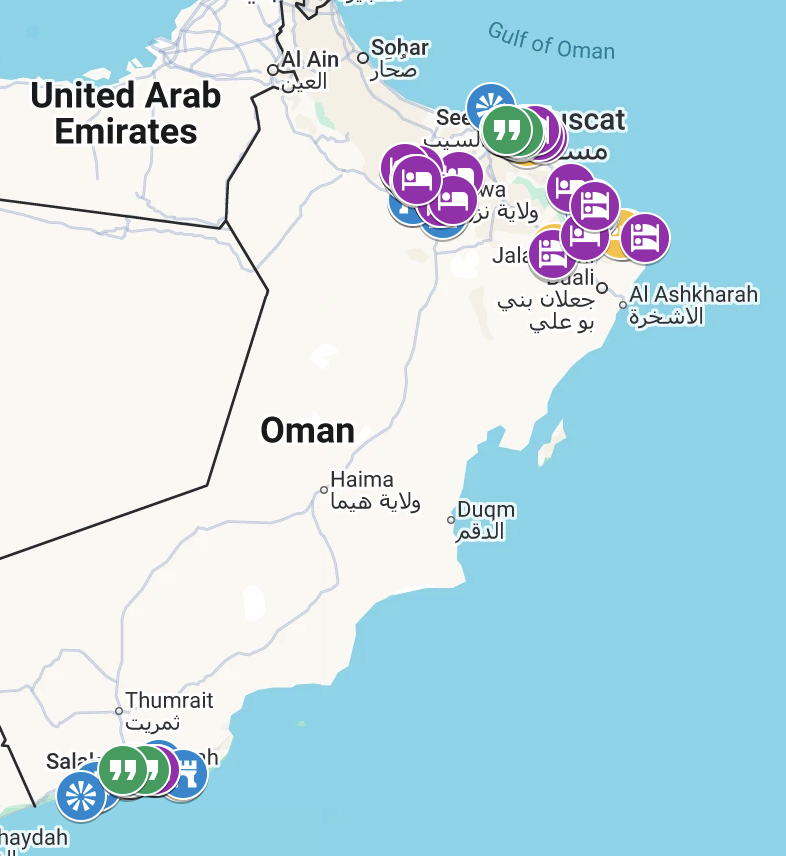
The map has honestly been super useful during the trip. I usually open it whenever I arrive in a new city to quickly see which places I want to visit nearby.
Kevin · February 2026
✓ Used by 155+ travelers planning their next trip